Palm Sunday Vector Illustration – A Design Review
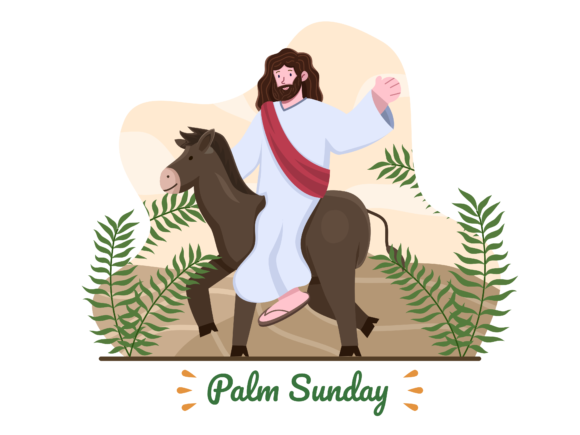
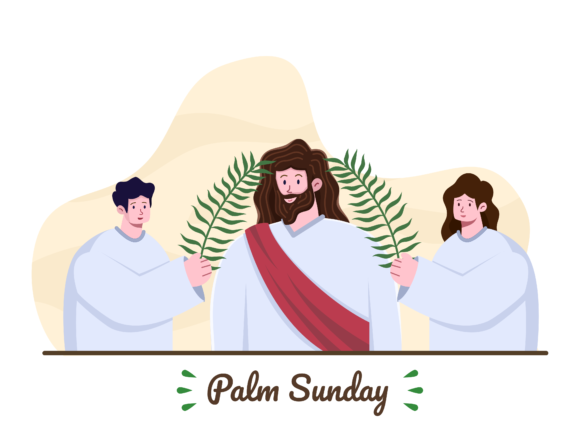
When I first opened the Palm Sunday Vector Illustration, I was struck by how directly it translates the biblical scene into a form that feels both reverent and usable. As someone who tests embroidery files before they ever go near a needle, I look for a few things right away: clarity of silhouette, stitchability of the linework, and whether the composition will hold up at different sizes. This design delivers on all three. The illustration shows Jesus entering Jerusalem with people greeting him, palm leaves in hand, and the overall mood is processional, dignified, and calm. That matters for embroidery because you want the final stitched piece to communicate the meaning of the story, not just the shapes.
I want to walk through this design from a practical, shop-floor perspective. If you are an Etsy seller, a small business owner, a craft fair vendor, or a hobbyist making holiday gifts, you need to know how this file behaves before you buy it, load it, and stitch it. Here is what I discovered after working with the Palm Sunday Vector Illustration in real projects.
First Impressions and the Mood It Creates
The composition centers on Jesus approaching Jerusalem, with figures on both sides holding palm branches. The linework is clean and purposeful, not overly detailed, which is exactly what you want in a machine embroidery design. The mood is celebratory but grounded. There is no clutter, no unnecessary ornament. The palm leaves are distinct, the human figures are simplified enough to read clearly at embroidery scale, and the overall movement of the scene flows from left to right, or from the center outward depending on your layout. This visual rhythm makes the Palm Sunday Vector Illustration feel like a natural fit for both religious and decorative projects.
Because this is a vector illustration, you have the flexibility to resize it without losing quality. That is a huge advantage when you are working with different hoop sizes and product blanks. I have tested this at multiple dimensions, and the readability holds up well down to about four inches wide, which is impressive for a scene with multiple figures.
Real-Life Scenario: A Custom Embroidered Tote Bag
Let me walk you through a real project I did recently. A customer wanted a set of custom tote bags for a church Palm Sunday event. They needed something that looked stitched, not printed, and that would feel special enough to use as a gift for volunteers. I chose the Palm Sunday Vector Illustration because the composition fit naturally on a standard tote bag front, roughly six by eight inches. The palm leaves gave the design a strong vertical element, and the figures created a horizontal base that anchored the scene.
I used a medium-weight cotton tote, a tear-away stabilizer, and a mid-range thread palette with gold, olive green, and soft brown tones. The satin stitch on the palm fronds came out crisp, and the fill stitch areas in the robes and background held their shape without puckering. The customer was thrilled, and the bags became a talking point at the event. That is the kind of outcome you want from a vector illustration that was designed with embroidery in mind, even if it started as a digital graphic.
How the Design Performs Across Different Products
I have tested the Palm Sunday Vector Illustration on several product types, and here is what I found. On custom apparel like sweatshirts and t-shirts, the design stitches cleanly when the fabric is stable. A mid-weight cotton or cotton blend works best. The design does not rely on tiny lettering or ultra-fine details, so it holds up well even after multiple washes. I recommend a medium-weight cutaway stabilizer for knit fabrics, especially if the garment is stretchy.
On baby clothes and toddler items, the design works beautifully when scaled down. The palm leaves and human figures remain recognizable, and the religious theme makes it a natural choice for baptism gifts, Easter outfits, or holiday family photos. Just be careful with the stitch density. If the design is too dense for a lightweight onesie or baby romper, the fabric may pucker. Test on a scrap piece of similar fabric first.
For patches, caps, and hats, the Palm Sunday Vector Illustration performs well if you keep the design within two to three inches. Curved surfaces like the front of a cap require a curved hoop or a careful placement strategy. The design does not have sharp corners or tiny details that would distort on a curve, but the palm leaves should be oriented so they follow the natural curve of the cap front.
On pillow covers, kitchen towels, and blankets, this design feels like a natural fit for seasonal decor. The religious theme works well for Easter and Palm Sunday, but it also functions as a meaningful gift for church members, pastors, or families celebrating a faith milestone. I have seen it stitched on linen pillow covers and flour sack towels, and the results are consistently professional.
Where to Use This Design Carefully
Not every product is the right home for this illustration. If you are working with very small hoop sizes, under three inches, the human figures may lose their detail. The palm leaves are still readable, but the faces and postures of the people become less distinct. For small applications, consider using just the palm branch element from the design as a standalone accent.
Textured fabrics like heavy fleece, bouclé, or thick knits can cause the stitch detail to blur. The same goes for very thin or sheer fabrics where the stabilizer shows through. I would not recommend this design for delicate silks or lightweight linens unless you are experienced with water-soluble stabilizer and careful hooping.
Dark fabric backgrounds can work if you choose thread colors with strong contrast. The Palm Sunday Vector Illustration relies on the figures and palm leaves being distinct from each other, so you want the thread colors to pop against the garment. A white or light cream thread on a navy or black garment works well. Avoid using dark brown or deep green thread on a dark fabric unless you have tested the contrast first.
Layered garments, such as jackets with linings or hoodies with thick fleece, require extra attention to stabilizer choice. The design is not extremely dense, but it is not a lightweight outline either. Use a medium-weight cutaway stabilizer for most garments, and consider a floating hoop technique if the fabric is too thick to hoop easily.
Visual Appeal, Product Value, and Customer Trust
When a customer receives a handmade product with a well-stitched design, their perception of value increases significantly. The Palm Sunday Vector Illustration has a professional, finished look that communicates care and intention. That matters for Etsy sellers, small shop owners, and boutique brands who rely on repeat business and word-of-mouth.
The design also works well for giftability. A custom embroidered piece with a religious theme is often purchased as a gift for a family member, a church leader, or a friend. The visual clarity of the illustration ensures that the recipient immediately understands the meaning. That emotional connection is what drives positive reviews and customer loyalty.
For brand consistency, if you are a seller who offers multiple religious designs, this vector illustration fits naturally into a collection. The style is classic without being dated, and the composition is versatile enough to pair with text or other decorative elements. You can use it as a standalone piece or as part of a larger layout.
Practical Embroidery Designer Notes
Before you stitch this design on a final product, there are a few steps I always recommend. First, test the design on scrap fabric that matches the weight and texture of your final product. This is not optional. You need to see how the satin stitches behave, whether the fill stitches lay flat, and whether the thread colors work together.
Check thread color contrast against your fabric. The Palm Sunday Vector Illustration has several elements, robes, palm leaves, faces, and background, that need to be distinct. Print a black and white mockup of the design at the size you plan to stitch. If the different elements blur together in grayscale, they will also blur together in low-contrast thread colors. Adjust your thread palette accordingly.
Review stitch density before you load the file. If the design feels too dense for your fabric, consider reducing the density in your embroidery software or choosing a different stabilizer. A dense design on a lightweight fabric will pucker. A dense design on a heavy fabric may cause needle breaks or thread tension issues.
Confirm your hoop size before you begin. The Palm Sunday Vector Illustration is a vector file, so you can resize it, but you need to know the dimensions that fit your hoop. Measure twice, hoop once.
Inspect small details like the faces and the palm frond tips. If any area looks too narrow or too fine for your machine, simplify it or remove it. A tiny detail that does not stitch cleanly will ruin the overall look of the design.
Finally, check the licensing terms for the Palm Sunday Vector Illustration before you use it for commercial projects, sell finished products, or include it in digital product bundles. The product description indicates it can be used for graphic purposes, but confirm whether the license covers commercial embroidery, digital file resale, or print-on-demand use. When in doubt, contact the seller.
Final Thoughts on the Design
The Palm Sunday Vector Illustration is a solid choice for embroiderers who want a religious scene that stitches cleanly, reads clearly, and fits a wide range of products. It is not a novelty design or a trendy graphic. It is a classic illustration that serves a specific purpose: telling the story of Jesus entering Jerusalem in a way that feels respectful and usable.
For small business owners and Etsy sellers, this design can be the centerpiece of a seasonal collection, a custom gift line, or a church event order. For hobbyists and crafters, it is a meaningful project that can be stitched on a tote bag, a pillow cover, a baby blanket, or a holiday gift. The palm leaves, the human figures, the processional layout, all of it works together in a way that feels complete and intentional.
If you are looking for a vector illustration that moves smoothly from digital file to finished embroidery, this is one to consider. Test it, size it appropriately, choose your thread colors with care, and you will end up with a product that your customers will appreciate and remember.